Intro to Robotics (with ROS 2)
Learn ROS 2, Python robotics nodes, topics, services, launch files, CLI debugging, sensors, and simulator-driven autonomous robot behavior in a browser-based robotics lab.
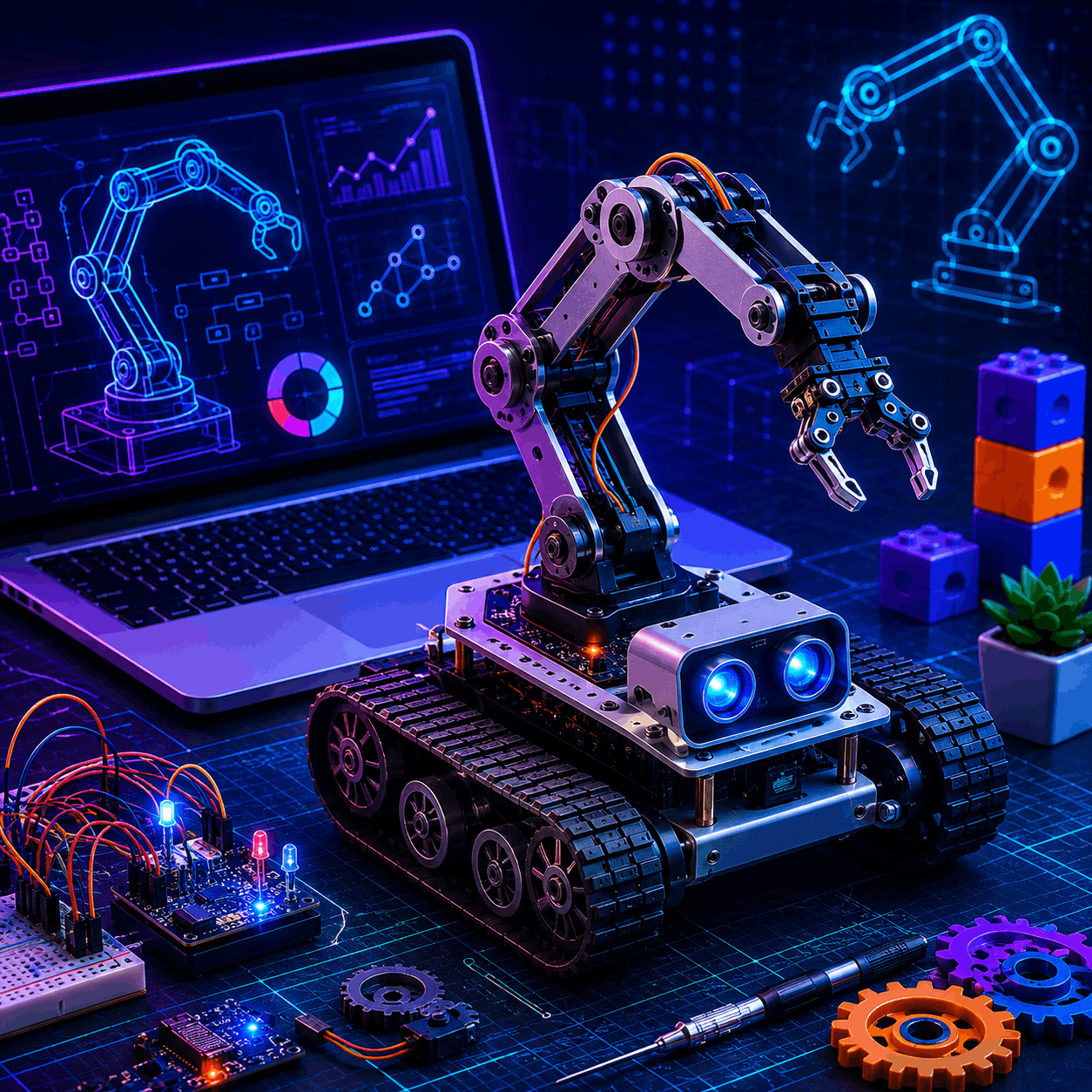
Course path
Robotics
6-8 weeks
Focused course arc
16
Guided lessons
ROS 2 robotics lab
Adaptive workspace
Project proof
Visible outcomes
What students build
Tangible projects, not passive lessons.
Each project gives students a reason to learn the next concept and a finished artifact they can explain.
Talker Listener System
Twist Driving Node
Robot Service Console
Sensor-Based Wall Follower
Autonomous Patrol Robot
Course experience
The workspace matches the subject.
Students work like junior robotics engineers: multiple terminals, Python ROS 2 nodes, simulator-backed feedback, and Nova guidance when systems get complex.
Nova explains
Students run work
Errors become lessons
Progress stays visible
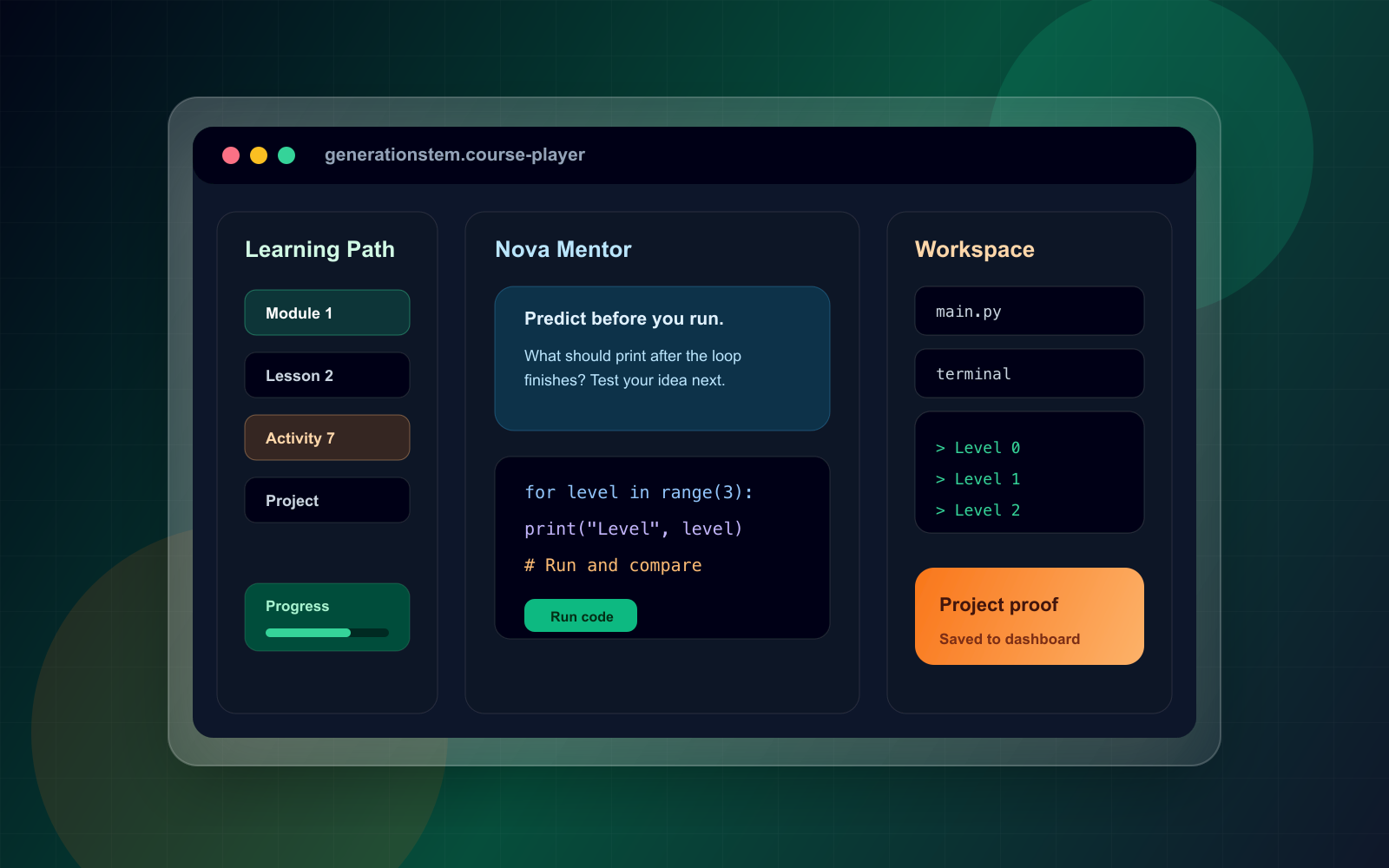
Robotics students connect code to live simulator behavior.
Curriculum
A clear path from first concept to final project.
8 modules designed for steady momentum and project-based practice.
Overview
Build the mental model of nodes, the ros2 CLI, and the simulator workflow before writing larger robot applications.
Learning Objective
Students verify the ROS 2 environment, run talker/listener nodes, inspect nodes and topics, and launch their first simulator.
Student outcomes
Use the same ROS 2 ideas professional robotics teams use
Run real terminal workflows with multiple sessions like an engineering lab
Watch code connect to robot behavior through a simulator window
Build a serious capstone project instead of toy-only exercises
Parent value
A future-facing STEM track connected to robotics, automation, and engineering
Browser-based learning with no local ROS installation required
Visible project progression from first node to autonomous patrol robot
Nova support, progress tracking, certificates, and portfolio-ready outcomes
Meet Nova
Students tackle hard problems. Nova stays with them.
Robotics combines code, terminal output, and simulator behavior. Nova helps students connect what they typed to what the robot does next. Nova asks before it tells, hints before it explains, and keeps the student doing the thinking.
Skills learned
Real technical vocabulary and practice.
Students learn the language of the field while building things that make each concept concrete.
Parent questions
Clear answers before you enroll.
Families usually want to know whether the course is safe, useful, age-appropriate, and worth the screen time. These answers are tuned to Intro to Robotics (with ROS 2).