
Do Kids Need Math to Code? What Parents Should Know in 2026
Kids do not need advanced math before coding, but coding can make logic, patterns, variables, coordinates, and data feel more useful and concrete.
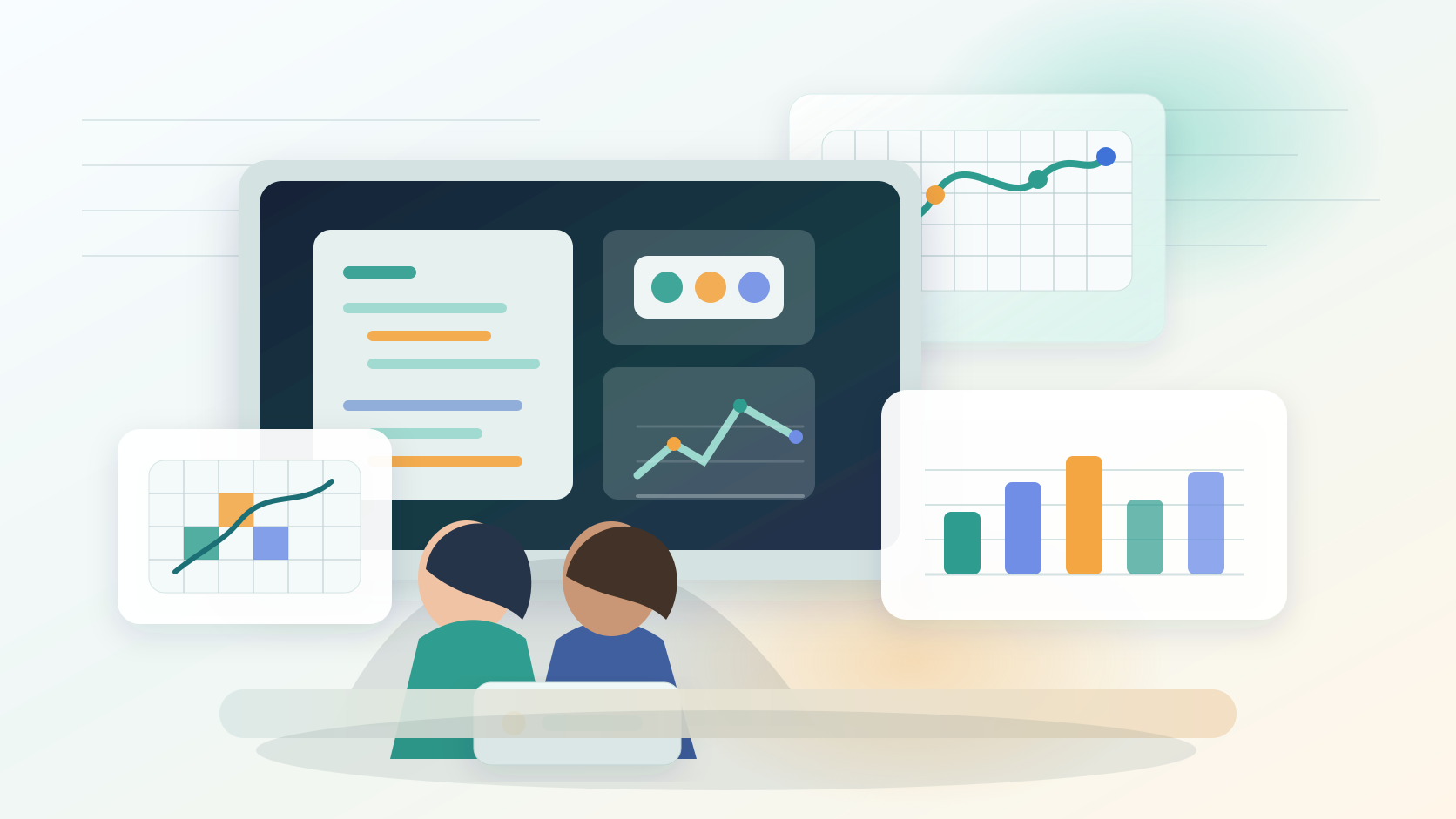
Many parents hesitate before enrolling a child in coding because of one quiet worry: "My child is not a math kid. Will coding be too hard?"
The short answer is no. Kids do not need advanced math before they start coding. A beginner can learn sequencing, loops, variables, conditionals, functions, debugging, and simple project logic with basic arithmetic and a willingness to try.
But the longer answer is more useful. Coding and math grow together. Programming gives students a practical reason to use patterns, coordinates, variables, estimation, logic, data, and step-by-step reasoning. For many kids, coding makes math feel less like a worksheet and more like a tool.
That matters in 2026 because parents are watching two trends at once. AI is changing how families think about future careers, while schools and education leaders are still trying to rebuild durable math and STEM confidence after pandemic-era learning disruption. The National Science Board's 2026 science and engineering indicators noted that lower-performing fourth- and eighth-grade students showed little or no math recovery from 2022 to 2024, even as higher-performing students improved. Meanwhile, AI and computer science are moving faster into K-12 classrooms.
For families comparing coding classes for kids, Python for Kids, online STEM classes, or AI classes for kids, the better question is not "Is my child already good at math?" It is "Can coding help my child practice the kind of thinking that makes math and technology less intimidating?"
Quick Answer: How Much Math Do Kids Need to Start Coding?
Kids need only basic math to start coding.
For a beginner, the most useful starting skills are:
- Counting and comparing numbers.
- Basic addition, subtraction, multiplication, and division.
- Understanding bigger, smaller, equal, and not equal.
- Following steps in order.
- Spotting patterns.
- Reading simple word problems.
- Staying patient when an answer does not work the first time.
That is enough for many early coding projects: quizzes, guessing games, timers, score counters, simple animations, choose-your-own-adventure stories, and beginner Python programs.
Advanced math becomes more important later, depending on the path. Game physics, machine learning, data science, robotics, graphics, cryptography, and advanced simulations can use algebra, geometry, probability, statistics, or calculus. But those are not the entry ticket.
For most children, coding should start with logic and creation, not a math gate.
Why Parents Connect Coding With Math
Parents are not wrong to see a relationship between coding and math.
Programming and math both ask students to reason carefully. Both require precision. Both reward pattern recognition. Both involve symbols that can feel abstract until a student sees how they work in a real situation.
The overlap shows up in common coding ideas:
- A variable in code works a lot like a named value in algebra.
- A loop is a repeated rule.
- A condition is a logic statement: if this is true, do that.
- A coordinate grid controls where objects appear on a screen.
- A score counter changes as a player earns points.
- A data chart turns numbers into a pattern a student can discuss.
- A function takes input, follows steps, and returns an output.
Those concepts are mathematical, but they do not have to be introduced through advanced formulas. A child can understand a game score before they understand formal algebra notation. A child can move a character across a grid before they master coordinate-plane vocabulary. A child can use a variable called score or lives before they solve textbook equations confidently.
That is one reason coding can help math confidence. It makes invisible ideas visible.
Coding Is More About Logic Than Calculation At First
Early coding is usually less about calculating large numbers and more about giving clear instructions.
A beginner learns to think like this:
- What should happen first?
- What should repeat?
- What should happen only if a condition is true?
- What information do I need to store?
- What changed when I ran the program?
- Why did the program do something different from what I expected?
That is computational thinking: breaking problems into smaller parts, finding patterns, using abstraction, designing steps, and testing the result.
Computer science standards increasingly treat these habits as foundational. Florida's updated K-12 computer science standards, effective July 2024, emphasize computational thinking and reasoning, programming, cybersecurity, emerging technologies, and digital citizenship across grade levels. The Computer Science Teachers Association's revised draft standards also connect computer science with math, science, English language arts, social studies, the arts, and cybersecurity rather than treating it as a narrow technical elective.
For parents, the takeaway is practical. A child who is not fast with arithmetic can still be thoughtful, creative, persistent, and strong at logic. Those traits matter in coding.
The Math Skills That Help Most With Beginner Coding
Not all math matters equally at the beginning.
Here are the skills that make early coding easier.
Patterns
Coding is full of patterns. Students notice that a command repeats, that a bug happens only in one situation, or that a set of instructions can be reused.
Pattern thinking supports loops, functions, animations, and game rules. It also helps students predict what a program will do before they run it.
Number Sense
Students should be comfortable comparing and changing numbers. They do not need to be brilliant calculators, but they should understand ideas like increasing a score, checking whether a number is above a limit, or counting how many guesses remain.
Python projects often make number sense concrete:
score = score + 10
lives = lives - 1
Those lines are not abstract. A student can see the game change.
Variables
Variables are one of the strongest bridges between coding and math.
In school math, a variable can feel mysterious. In code, it can feel useful: name, score, age, speed, answer, level, or inventory.
Students learn that a variable stores information so the program can use it later. That simple idea prepares them for algebraic thinking without making coding feel like an algebra test.
Coordinates And Spatial Reasoning
Games, drawings, animations, and web layouts often use position.
A student may need to move an object left, right, up, or down. Later, they may use x and y coordinates, angles, width, height, margins, or grids. This builds geometry intuition through action.
For students who dislike traditional geometry worksheets, visual projects can be a better doorway.
Logic And Comparisons
Coding uses logic constantly:
if answer == secret:
    print("You got it")
Students learn to compare values, check conditions, and decide what should happen next. This helps with mathematical reasoning, but it also helps with everyday problem solving.
Data And Simple Statistics
As students grow, data becomes a powerful connection between math and coding. A child might track game scores, survey results, reading minutes, weather observations, or sports stats.
This is where coding begins to connect with data science for kids. Students learn that numbers can answer questions, but only if the question, data, chart, and explanation are handled carefully.
How Coding Can Help Kids Who Struggle With Math
Coding is not a magic fix for math struggles. A child who needs support with fractions, multiplication, or word problems still needs good math instruction.
But coding can change the emotional context.
Many students experience math as a page of answers that are either right or wrong. Coding adds a different kind of feedback. The program runs, breaks, prints something unexpected, or shows a visible result. The student can test one change at a time.
That process can make math feel less final.
In coding, mistakes are normal. Bugs are expected. Revision is part of the workflow. A student can say, "The score did not update because I changed the wrong variable," instead of "I am bad at math."
This is especially helpful when projects are concrete:
- A timer counts down.
- A character moves on a grid.
- A quiz tracks correct answers.
- A chatbot rule checks private information.
- A chart shows which practice strategy worked.
- A website layout changes when the screen gets smaller.
Each project gives math a job.
For families trying to turn screen time into something more constructive, this is one of the strongest arguments for guided technical learning. Coding can turn productive screen time into a place where logic, math, creativity, and persistence reinforce each other.
What Changes As Kids Move From Blocks To Python
Young beginners often start with block-based coding. Blocks reduce typing friction and let students focus on sequence, loops, conditions, and events.
As students mature, Python becomes a strong next step because it is readable and useful beyond beginner lessons. Python is used in automation, data science, AI, web backends, robotics, and many professional technical workflows.
The move from blocks to Python does not require advanced math. It does require more comfort with:
- Typing accurately.
- Reading error messages.
- Following indentation.
- Naming variables clearly.
- Understanding that code runs in order.
- Testing small changes before adding more.
Math enters naturally through projects.
A Python guessing game uses comparisons. A quiz uses scoring. A simple store simulation uses totals and discounts. A drawing project uses coordinates. A sports tracker uses averages. A data project uses charts.
That is why Python for Kids works best when students build real things, not just memorize syntax. The project gives the math a reason to exist.
AI Makes Math Thinking More Important, Not Less
Parents are also asking a newer question: if AI can write code, does math still matter?
Yes, but the reason is changing.
AI can generate a draft of code, explain a formula, suggest a chart, or help debug an error. But a student still needs enough reasoning to judge whether the answer makes sense. AI can make incorrect logic look polished. It can produce code that runs but solves the wrong problem. It can generate a chart without understanding whether the data supports the conclusion.
Pew Research Center reported in February 2026 that 64% of U.S. teens use AI chatbots, while parents often underestimate how much teens are using them. A separate 2026 parent survey from Intuit Credit Karma found that many parents believe AI requires a different playbook for preparing kids for the future.
The practical response is not panic. It is skill-building.
Students need to learn how to:
- Break a problem into parts before asking AI for help.
- Check whether code output matches the goal.
- Estimate whether a number is reasonable.
- Compare an AI explanation with what the program actually does.
- Explain the logic in their own words.
- Notice when a chart or answer overclaims.
Those are math-adjacent habits. They are also AI literacy habits.
For a deeper family framework, see AI Literacy for Kids: The Chatbot Rules Parents Should Teach First and AI Agents for Students.
A Practical Learning Path By Age
Every child develops differently, but this sequence works for many families.
Ages 7-9: Logic Before Formal Math
At this stage, focus on patterns, sequencing, cause and effect, puzzles, simple commands, and visible projects. The goal is not to rush into text-based code. The goal is to help the child understand that instructions create outcomes.
Good activities include:
- Screen-free algorithm games.
- Visual coding puzzles.
- Simple animations.
- "What happens next?" prediction games.
- Board games that involve rules and strategy.
Ages 9-12: Beginner Python And Project Math
This is often a strong window for Python basics. Students can begin using variables, loops, conditionals, lists, input, and simple functions.
Projects should include light math in context:
- A scorekeeper.
- A multiplication practice game.
- A random number guessing game.
- A virtual store with totals.
- A simple pet simulator with hunger or energy points.
- A chart based on family survey data.
The goal is not speed. The goal is clarity.
Ages 12-14: Data, Web, And Better Explanations
Middle school students can connect coding to data, web pages, games, robotics, and AI safety.
They should practice explaining their logic:
- What does this variable store?
- Why does this condition work?
- What does the chart show?
- What does it not prove?
- What test would catch this bug?
This is where math starts to become a communication tool, not just a calculation task.
Ages 14+: Technical Depth And Specialty Paths
Older students can branch into web development, data analysis, cybersecurity, robotics, AI projects, or more advanced Python.
Some paths need more math than others. Cybersecurity may use logic, systems thinking, and later cryptography. Data science uses statistics. Game development uses coordinates, geometry, and sometimes physics. AI uses data, probability, model evaluation, and ethical judgment.
But the same foundation remains: clear thinking, careful testing, and the ability to explain how a system works.
What Parents Should Look For In A Coding Program
If math confidence is a concern, the learning environment matters.
Look for a program that:
- Starts with projects instead of abstract lectures.
- Teaches variables, loops, and conditions through visible outcomes.
- Lets students run code in small steps.
- Treats bugs as part of learning.
- Gives hints without simply handing over answers.
- Shows parents what the child is building.
- Connects coding to math, data, AI, and real problem solving over time.
Be cautious with programs that move too quickly into advanced syntax, hide all thinking behind drag-and-drop shortcuts, or use AI to generate finished answers before the student has built the underlying logic.
A good coding path should make a child more willing to reason, test, revise, and explain.
Simple At-Home Activities That Build Math For Coding
Parents do not need to be programmers to support this.
Try these low-pressure prompts:
- Ask your child to write step-by-step instructions for making a sandwich, brushing teeth, or setting up a game.
- Have them design a simple board game and explain the rules.
- Track points during a family game and ask what changed the score.
- Draw a grid and move a character using directions.
- Make a small survey and turn the answers into a chart.
- Ask "What should happen if..." questions to practice conditional thinking.
- When a program breaks, ask "What changed since it last worked?"
These activities build the habits behind code: sequence, logic, variables, conditions, debugging, and explanation.
FAQ
Do kids need to be good at math to learn coding?
No. Kids do not need to be advanced or unusually strong in math to start coding. Beginner coding mostly requires logic, patience, basic arithmetic, pattern recognition, and step-by-step thinking.
What math is needed for Python for kids?
Beginner Python uses basic arithmetic, comparisons, variables, counting, simple coordinates, and logic. More advanced Python paths like data science, AI, simulations, and game physics can use statistics, algebra, geometry, or probability later.
Can coding help my child with math?
Coding can support math confidence because it gives math ideas a visible purpose. Variables, loops, coordinates, scores, charts, and patterns become part of games and projects instead of isolated worksheet problems.
Should my child learn math first or coding first?
They can learn together. A child can start coding with basic math and gradually encounter new math concepts through projects. The best path depends on age, confidence, reading level, and interest.
Is coding harder than math?
Coding and math are hard in different ways. Coding requires precision, logic, debugging, and persistence. Math often requires abstraction and symbolic reasoning. Many students who struggle with traditional math enjoy coding because they can see and test the result.
Does AI make math less important for coding?
No. AI can help generate or explain code, but students still need enough logic and math judgment to check whether the answer is correct, reasonable, safe, and aligned with the goal.
Suggested Related Articles
- Best Programming Language for Kids in 2026
- Data Science for Kids
- Productive Screen Time for Kids
- Future-Proof Skills for Kids
- AI Literacy for Kids
Sources
- National Science Board: The State of U.S. Science and Engineering 2026
- National Science Foundation: AI professional development for K-12 teachers
- Pew Research Center: What Parents Say About Their Teen's AI Use
- Computer Science Teachers Association: Revised PK-12 Computer Science Standards Draft 3.0
- Florida Department of Education: Computer Science Standards and Instructional Support
- Intuit Credit Karma: How AI Is Reshaping How Parents Think About Their Kids' Futures
The Bottom Line For Parents
Kids do not need advanced math before they learn to code. They need a good starting point, a project they care about, and enough support to keep testing when the first attempt does not work.
Over time, coding can make math more practical. It helps students see why variables, patterns, coordinates, logic, and data matter. In an AI era, that combination is powerful: students learn not only how to use technology, but how to reason through it.
If your child is curious but not yet confident, start with guided projects. Generation STEM's coding classes for kids, Python for Kids course, and online STEM classes are built to help students turn screen time into real technical confidence, one project at a time.