Courses/Biotech · Ages 13-18 · Intermediate

Biotech I

A Python-powered bioinformatics course where teens build a 16-program Sequence Lab notebook to read DNA, decode proteins, analyze mutations, search sequence databases, and identify an unknown sample.

16 lessons6-8 weeksNova AI mentorBrowser workspace
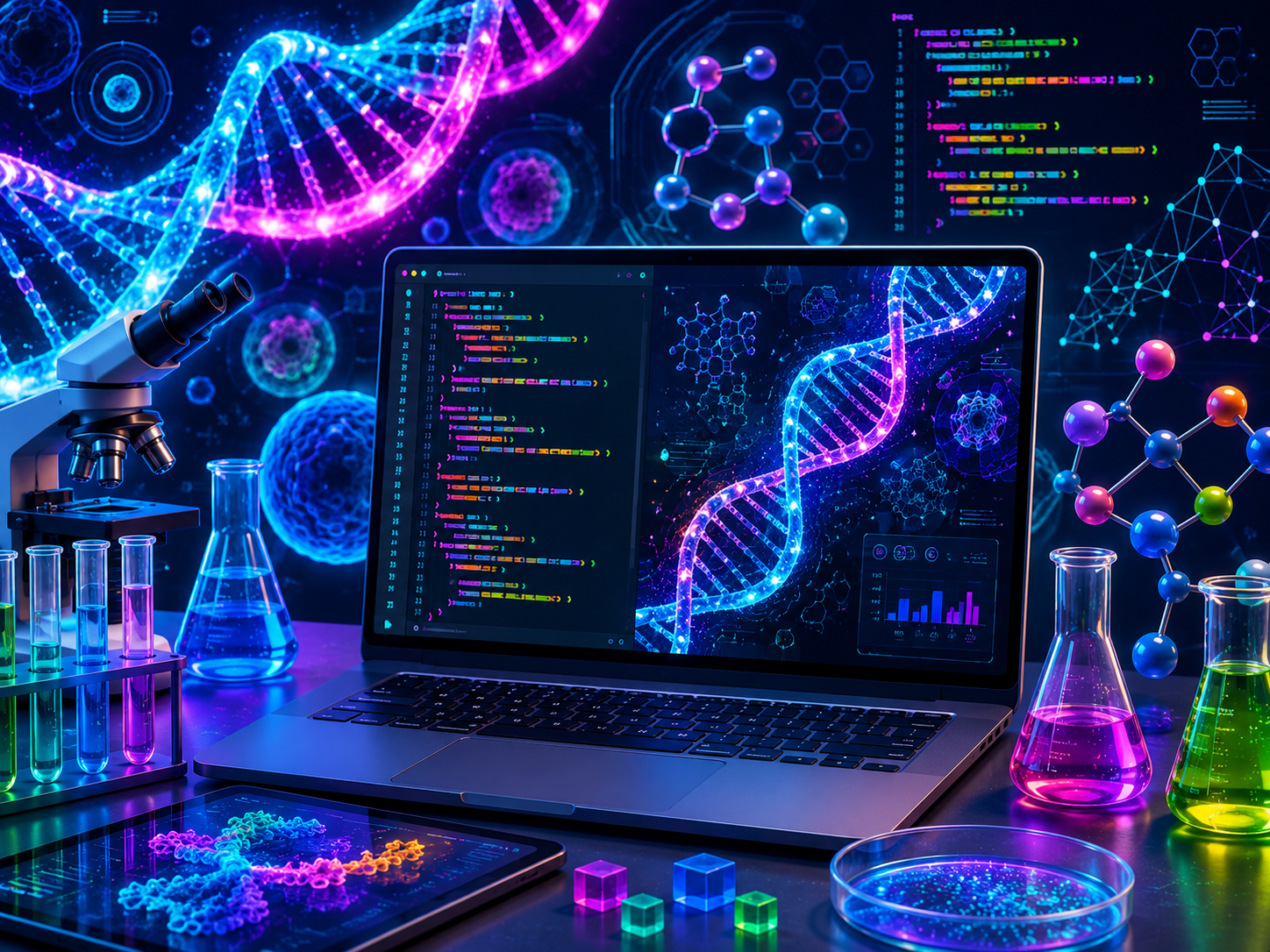
Biotech I course artwork
// see it for real

Not a certificate — a real project.

By Lesson 3, your teen builds DNA Analyzer — and can open it, run it, and explain how it works.

Here's the exact project, rendered live — no stock screenshots, no fluff.

Biotech · BioinformaticsLesson 3

DNA Analyzer

Transcribes real DNA into RNA and measures its GC content, like a lab bioinformatician.

// what students build

Tangible projects, not passive lessons.

Each project gives students a reason to learn the next concept - and a finished artifact they can explain.

01
Base Counter
02
GC Fingerprint Calculator
03
Reverse-Complement Tool
04
Codon Splitter
05
Gene-to-Protein Translator
06
Mutation Analyzer
07
FASTA Reader
08
Sequence Detective
// course experience

The workspace matches the subject.

Students build through real browser workspaces while Nova helps them debug, understand, and keep moving.

Approved DNA and protein data
Python sequence analysis
Deterministic validation
No unsafe wet-lab content
course-player.png
[ course-player.png ]Python · terminal · sequence database lab
// curriculum

A clear path from first concept to final project.

8 modules designed for steady momentum and project-based practice.

DNA is a string of four letters. Students read it, measure it, count the bases, and compute the GC fingerprint that helps identify sequence character.

Learning objective: Students build a base counter and GC-content calculator while learning DNA strings, A/C/G/T base counts, length, indexing, percentages, and biological fingerprints.

Lesson 1: The Four-Letter CodeLesson 2: GC Content
🎓
Students:
Learn biotech through real Python programs instead of memorizing biology vocabulary
Use authentic terms like DNA, GC content, reverse complement, codon, protein, ORF, mutation, FASTA, percent identity, and BLAST
Run programs against approved sequence endpoints while staying inside a safe sandbox
Practice Python, biology, data analysis, pattern matching, and scientific reasoning in one course
Finish with a 16-program Sequence Lab notebook and a mini-BLAST sequence detective
👪
Parents:
A premium STEM pathway that connects coding to modern biology, medicine, genomics, and data science
No wet-lab protocols, medical advice, unsafe bioengineering, or uncontrolled internet access
Safe internal sequence endpoints instead of arbitrary public internet access
A strong next step after Python for Teens for students interested in biology, medicine, AI, research, or data science
Visible portfolio outcomes, Nova support, parent progress tracking, achievements, and certificates
// skills learned

Real technical vocabulary and practice.

Students learn the language of the field while building things that make each concept concrete.

DNA StringsBase CountingGC ContentComplementsReverse ComplementsTranscriptionCodon SplittingGenetic Code DictionariesProtein TranslationMotif SearchOpen Reading FramesMutation AnalysisFASTA ParsingSequence Database SearchPercent Identity
// proof of work

Finish the course. Earn the certificate.

Every track ends in a verifiable Certificate of Completion - a real milestone your student can add to a portfolio, application, or resume. Proof they didn't just watch a video; they shipped real projects.

Awarded automatically when all lessons are complete
A shareable PDF plus a verifiable completion link
Lists the real skills practiced - not just attendance
A finish line students actually work toward
Start the course →
Generation STEM
Certificate of Completion
This certifies that
Your Name
has successfully completed all projects of
Biotech I
Daniel Mondeu
Founder, Generation STEM
CERTIFIED
January 1, 2026
Date issued
// parent questions

Clear answers before you enroll.

Biotech I teaches students to treat DNA and proteins as data. Students learn base counting, GC content, complements, reverse complements, transcription, codons, protein translation, motif search, open reading frames, mutations, FASTA parsing, database search, percent identity, and mini-BLAST-style sequence identification.

Ready to start Biotech I?

Get the course, Nova mentoring, browser workspaces, and parent-visible progress with one family plan.

From $174 upfront for 6 months · 30-day money-back guarantee